

By Staff Reporter
Nairobi, Kenya — Shelter Afrique Development Bank (ShafDB) has launched its first sustainable bond, worth FCFA 60 billion (approximately USD 100 million), to mobilize local-currency financing for affordable and sustainable housing projects across the West African Economic and Monetary Union (WAEMU).
The transaction is arranged by CGF Bourse Dakar as lead arranger. The International Finance Corporation (IFC) and Ecobank Group, through Ecobank Senegal, are anchor investors.
The bond is structured in two tranches: a five-year tranche at 6.10% and a seven-year tranche at 6.30%. The subscription period runs from 7 to 30 October 2026.
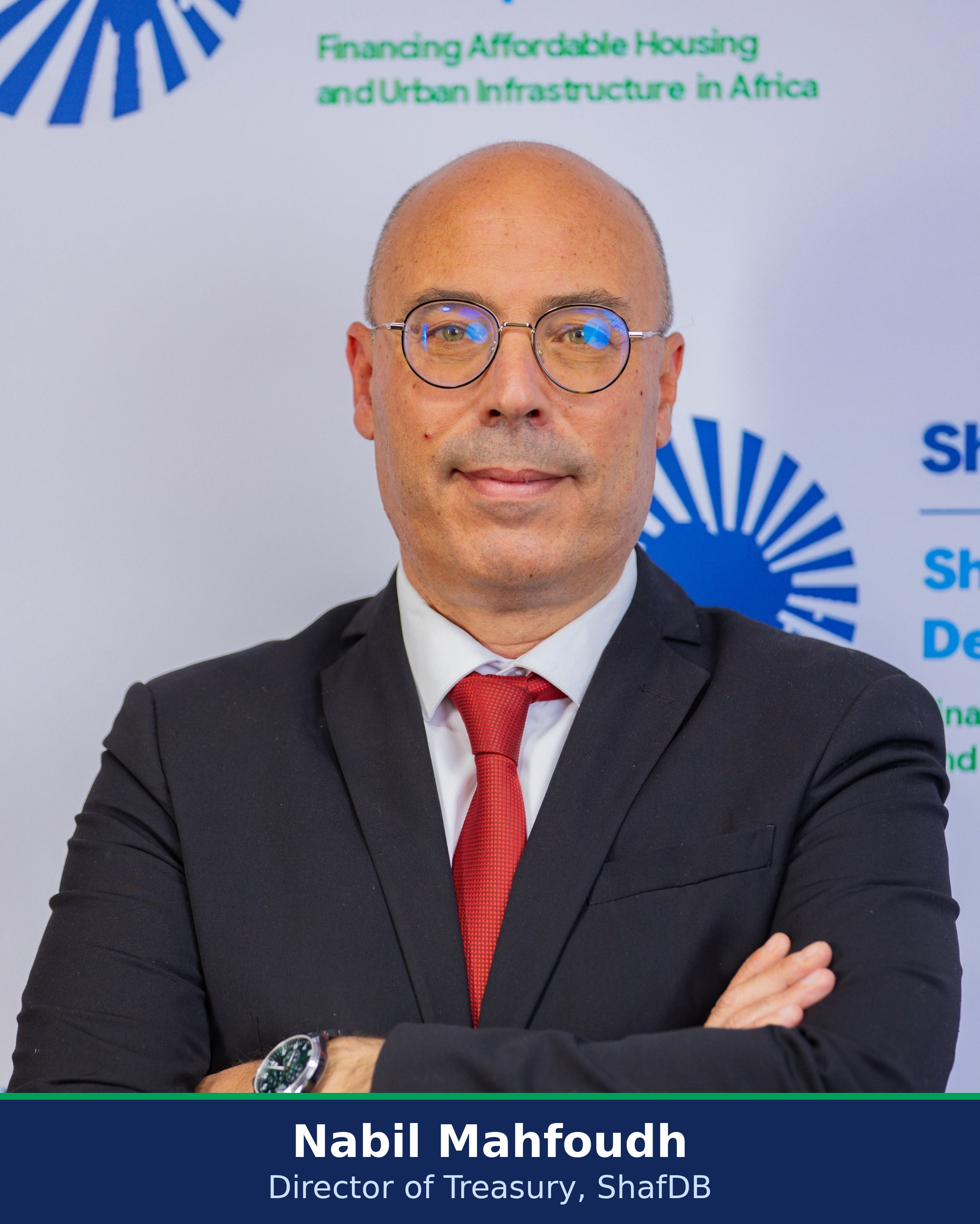
“Our ambition is not simply to raise capital, but to build a more diversified and resilient financing platform for housing and urban development across Africa,” said Nabil Mahfoudh, Director of Treasury at ShafDB. “Deepening our presence in West African capital markets allows us to connect local savings with urgent development needs and deploy financing in the same currency that local developers earn.”
A new stage in ShafDB’s transformation
The transaction is part of ShafDB’s strategic transformation into a pan-African multilateral development bank. The institution aims to scale up its operations and significantly increase its impact across its 44 shareholder countries.
The transformation is accompanied by a strategy to diversify funding sources, expand access to African capital markets, mobilize resources from international partners and strengthen the institution’s capital base to better meet the continent’s financing needs.
Financing housing in local currency
The WAEMU housing market faces a significant structural deficit. Estimates cited by the World Bank Group put the shortfall at around 3.5 million housing units, with nearly 250,000 additional units needed each year to keep pace with population growth and urbanization.
ShafDB’s issuance aims to channel financing into affordable, sustainable and energy-efficient housing projects while better matching the currency of financing to the revenues projects generate.
Using local currency is an important way to finance the real estate sector, the bank said. Matching financing to project revenues can help reduce borrowers’ exposure to currency risk, particularly for medium- and long-term real estate investments.
Sustainable financing framework developed with GGGI
ShafDB partnered with the Global Green Growth Institute (GGGI) to develop and publish its Sustainable Financing Framework ahead of the issuance.
The framework received a favorable opinion from S&P Global, supporting the credibility and transparency of ShafDB’s sustainable-finance approach and its alignment with principles for green and social financial instruments.
The transaction also received approval, or a visa, from the Autorité des Marchés Financiers de l’UMOA (AMF-UMOA).
Mobilizing African savings for development
The issuance aligns with the New African Financial Architecture for Development (NAFAD), as set out in the Abidjan Consensus. The initiative aims to strengthen the mobilization of African savings and further develop the continent’s capital markets as a complement to international resources.
The broader goal is to increase the use of domestic and regional resources to finance Africa’s development priorities, particularly housing, urban infrastructure and sustainable development.
ShafDB has completed 11 bond issuances across various African markets, demonstrating its ability to mobilize local-currency resources from African investors. Its most recent issuance took place in Nigeria in April 2022, when the bank raised NGN 46 billion, equivalent to approximately USD 110 million.
A new chapter for ShafDB
Through the sustainable bond issuance, ShafDB reaffirms its commitment to mobilizing African capital and financing the housing and urban development solutions the continent needs.
Ends…




 Loading …
Leave a Reply