

A 36-year audit of the economic emancipation that never was: agriculture, mining, fishing, transport, value addition, manufacturing and road construction
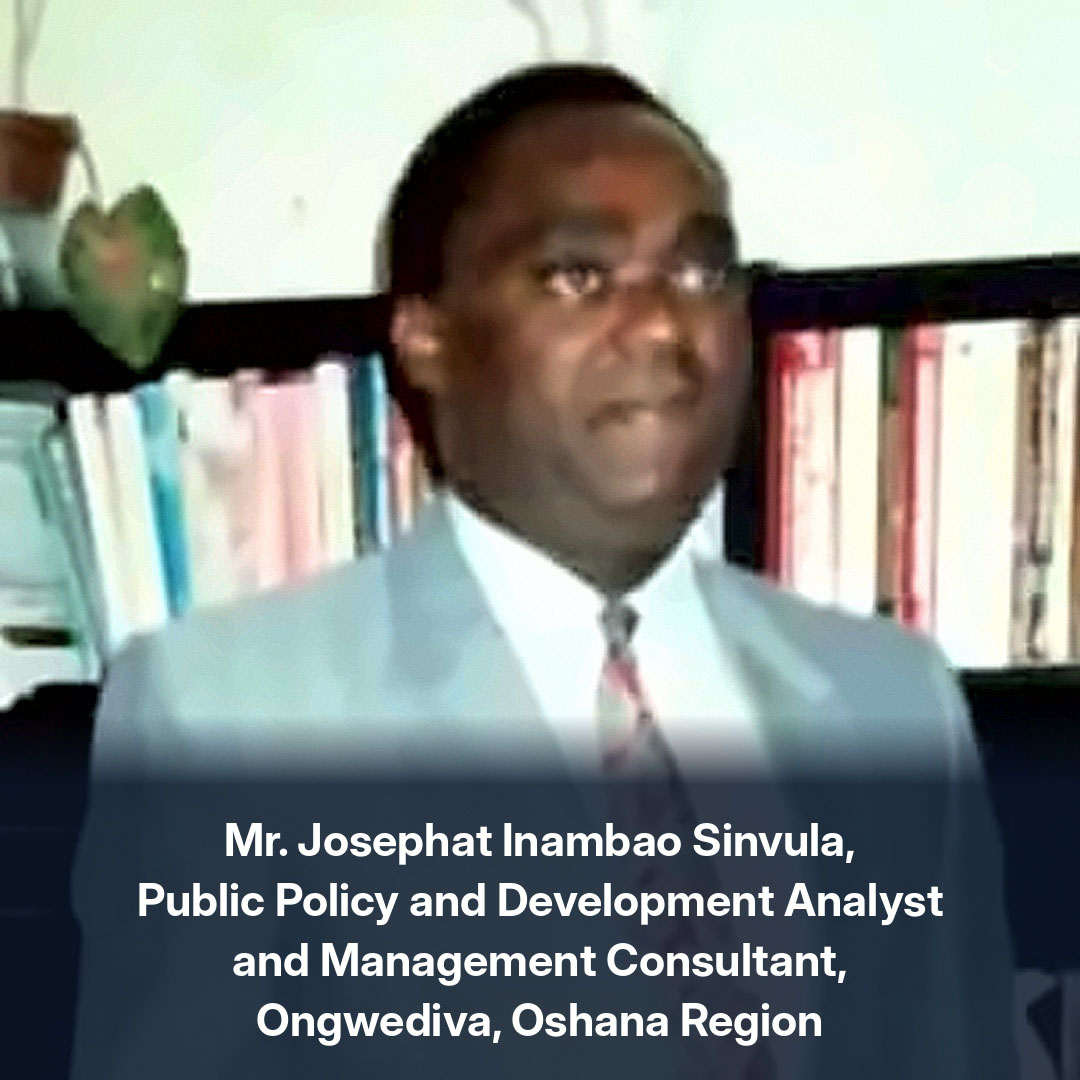
By Josephat I. Sinvula
On 21 March 2026, Namibia marked 36 years of political independence. The flag changed; the economy did not. This article argues that Namibia has no Black economy to speak of, only a white-dominated economy that has changed little since 1990 and is now protected by a Black political elite.
Through a sector-by-sector audit of ownership in agriculture, mining, fishing, transport, value addition, manufacturing and road construction, it shows that economic emancipation has been reduced to tenders, speeches and commissions of inquiry, while ownership of productive assets remains racially structured.
The test is simple and visible in Windhoek. Have you ever seen white Namibians queuing for a taxi to Katutura, or taking one home from Ludwigsdorf after work? If not, where is the Black economy we celebrate in our national development plans and the Harambee documents?
The Unfinished Business of 21 March 1990
We celebrated political freedom in 1990 without economic freedom. Article 16 of the Constitution protected property acquired under apartheid, while Article 100 vested natural resources in the State. In practice, Article 16 prevailed over Article 100.
The SWAPO Government adopted national reconciliation, willing-buyer, willing-seller land reform and neoliberal structural adjustment, without a deliberate policy of ownership transfer. The result is what this article calls emancipation by speech: Vision 2030, the National Development Plans, the Targeted Intervention Programme for Employment and Economic Growth (TIPEEG), the Growth at Home Strategy, the Harambee Prosperity Plans I and II, and the stillborn New Equitable Economic Empowerment Framework (NEEEF). All speak of an inclusive economy. None measures who owns what.
What Is an Economy?
An economy is not employment, a salary, or a tender to supply bottled water to a ministry. An economy is ownership of land, mines, fishing vessels and quotas, factories, banks, transport fleets, and the means to add value. By that definition, Black Namibians do not own an economy; they hold jobs in someone else’s.
The Namibia Statistics Agency’s Labour Force Survey 2023 shows that Black Namibians make up 87% of private-sector employees but own less than 5% of firms with a turnover above N$10 million.
Agriculture: Who Owns the Land That Feeds Us?
In 1990, 4,200 white commercial farmers owned 44% of total agricultural land. Today, some 3,800 white farmers still own 70% of commercial farmland by value, because resettlement farms have been subdivided into unproductive units while prime land has remained largely intact.
No Namibian-owned abattoir of scale has emerged. Meatco remains state-owned, yet it slaughters mainly cattle supplied by white commercial farmers, and the beef value chain is controlled from Windhoek’s southern industrial area, not from Katutura. The Green Schemes tell the same story: of 11 schemes, nine are run by white managers under Agribusdev, with Black cooperatives supplying the labour.
Namibia imports N$4.2 billion worth of horticultural produce from South Africa every year, while Oshikoto and Omusati have water. Why? Because the cold chains, the seed companies and the Shoprite shelf space are not Black-owned.
Mining: The Earth Belongs to the State, the Mine Does Not
Mining contributes 11.5% of GDP but employs only about 2% of the workforce. The Minerals (Prospecting and Mining) Act vests minerals in the State. The reality is different: Epangelo Mining holds 7% of exclusive prospecting licences (EPLs) by number and 0.3% by value.
In 1990 the dominant names were CDM (De Beers), Rössing (Rio Tinto) and Tsumeb. Today, De Beers still co-owns Namdeb with the Government on a 50/50 basis, while B2Gold, QKR Namibia and Chinese lithium companies hold 80% of new critical-minerals licences in Erongo.
Where is the beneficiation? We export rough diamonds worth N$20 billion and cut and polish only N$1.2 billion locally. We export lithium ore to China and import batteries from China.
Fishing: Namibianisation on Paper, Fishrot in Practice
The Fisheries Policy White Paper of 1991 promised Namibianisation. Thirty-six years later, of 120 licensed fishing vessels in 2023, 89 are foreign-owned or foreign-managed through Namibian-registered companies.
Three companies, Namsov, Tunacor and Merlus, historically owned by white Namibian families, control 58% of the hake quota by value, even after Fishrot. Fishrot was not an anomaly. It was the logical outcome of an emancipation policy that turned quota into a political gift rather than a productive asset.
Enterprise Development: The Tender Economy
There is no Black industrialist class, only a tenderpreneur class. In retail, Shoprite, Pick n Pay, Woolworths and Spar, all South African, control 82% of formal retail. A Black SME cannot secure shelf space without accepting 90-day payment terms that choke its cash flow.
The so-called Black economy is in fact the taxi economy, the kapana economy and the tender economy: survivalist, not accumulative.
Transport and Logistics: We Own the Roads, They Own the Trucks
Namibia has some of the best roads in Africa. Who builds them, and who moves goods on them? Between 2015 and 2023, 70% of road contracts of Grade 9 and above went to five companies: Raubex, CMC, China Henan, Otesa and Grinaker, all foreign- or white-owned.
Of 4,800 registered heavy trucks used for cross-border transport on the Walvis Bay Corridor, 61% are South African-registered, 23% Zambian and only 16% Namibian-owned. A Namibian driver in someone else’s truck.
Value Addition and Manufacturing
Manufacturing’s share of GDP fell from 13.5% in 1990 to 8.9% in 2023. We have 200,000 tons of salt at Swakopmund, yet we import table salt. We have lithium at Uis, yet we export it raw. We have 2.5 million cattle, yet we export them live to South Africa. We have marble in Karibib, yet we export blocks to Italy and import tiles.
The Reality Check in Windhoek
At 17h00, stand at Ausspannplatz or Maerua Mall and count how many white Namibians board taxis to Katutura, Khomasdal, Otjomuise or Hakahana. You will count zero. Now stand at Wernhil or the Katutura taxi rank at 06h00 and count the Black workers heading to Eros, Kleine Kuppe, Ludwigsdorf and Olympia to clean houses, guard houses and work in factories they do not own. That spatial apartheid is economic apartheid.
What Has Government Done Since 1990?
- Willing buyer, willing seller: failed.
- NEEEF Bill: drafted in 2011 and never passed, stalled by white business and a Black elite.
- Growth at Home: no growth at home for Black manufacturers.
- Harambee: prosperity for tenderpreneurs, not producers.
The post-independence government has protected Article 16 ownership at the expense of economic emancipation.
Conclusion
Thirty-six years after independence, Namibia is a politically free country with an economically captive majority. We have a flag, an anthem and a Constitution. We do not have an economy that we own.
Until a Black child in Ongwediva can own the farm, the mine, the fishing vessel, the factory and the construction firm that builds the road to their village, we have not yet emancipated ourselves.
Sources
- Auditor General, Green Schemes Report 2022
- Bank of Namibia, Annual Report 2023
- BIPA, Company Register 2023
- Chamber of Mines, Annual Report 2023
- Competition Commission, Retail Study 2022
- DBN, Annual Report 2022
- FNB, Housing Index 2023
- Government of Namibia, Harambee Prosperity Plans I and II
- Government of Namibia, National Development Plans (NDP1 to NDP6)
- Government of Namibia, Vision 2030
- IPPR, Fishing for Facts 2023
- MFMR, Vessel Registry 2023
- MLR, Annual Report 2024
- MME, Mining Cadastre 2024
- NSA, Labour Force Survey 2023
- NSA, Trade Statistics 2023
- Roads Authority, Procurement Report 2015-2023
- WBCG, Annual Report 2023
- World Bank, Inequality Report Namibia 2023
About the Author
Josephat I. Sinvula is a public policy and development analyst. He holds a BSc in Urban Studies and Planning (specialising in Public Policy and Social Change) from Virginia Commonwealth University and an MPA from Atlanta University, USA. He is a management consultant based in Ongwediva, Oshana Region. Cell: 081 234 6326 | Email: sinvulajoe2@gmail.com




 Loading …

Leave a Reply