

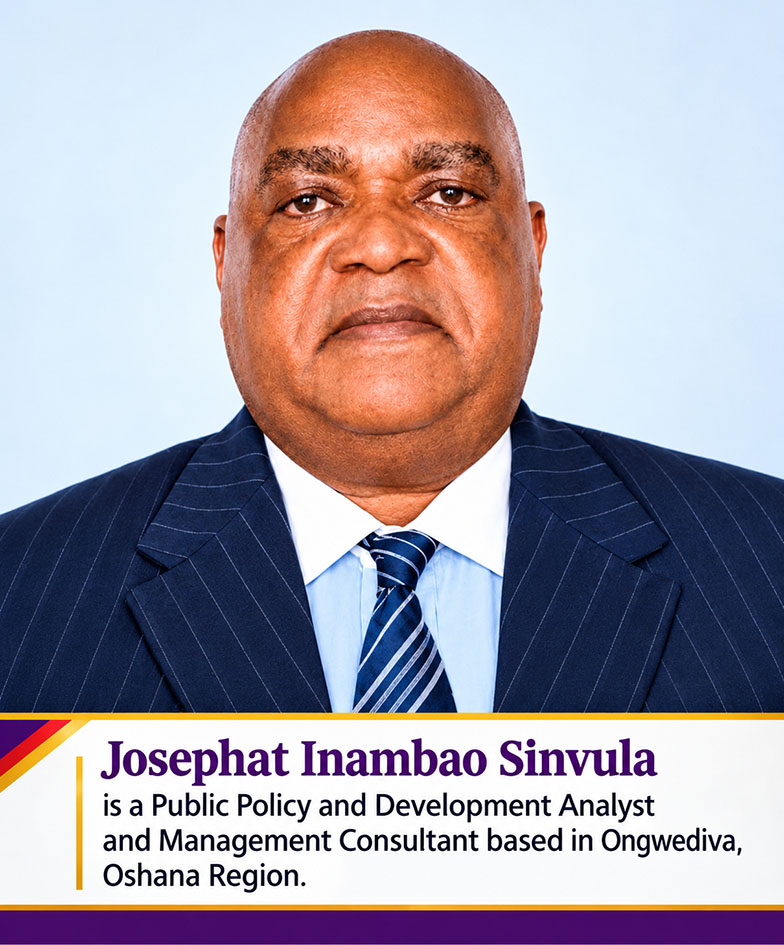
By Josephat Inambao Sinvula, Public Policy and Development Analyst and Management Consultant, Ongwediva, Oshana Region
Namibia gained independence in 1990 to empower Namibians. Thirty-six years on, what went wrong?
Botswana offers a lesson. Under its Trade Act (Act 25 of 2019) and Industrial Development Act (Act 23 of 2019, in force from 1 June 2020), it reserved over 30 low-capital activities for citizens: 17 under Trade and 21 under Industrial manufacturing. At small scale, the business is 100% citizen. At medium-to-large scale, foreigners may take part only through joint ventures with citizens holding at least 51%. Fronting, where a citizen lends their name to a foreign-run business, is an offence: up to P50,000 for a first offence, and imprisonment for subsequent offences.
Botswana’s own officials admit that fronting persists and that the policy is hard to police. The lesson is that a list without enforcement fails.
Some of Botswana’s reserved activities
Trade Act: car wash, cleaning services, curio shop, florist, fresh produce, funeral parlour, general dealer, hair and beauty parlour, imported pre-owned cars, internet café, laundromat, take-away.
Industrial Development Act: bread and confectionery, ice, meat processing, peanut butter, water purification and bottling, bricks, school uniforms, packaging.
What went wrong in Namibia?
Our post-independence open-door policy was well-intentioned but flawed. Under the Foreign Investments Act 27 of 1990, we came to treat almost every applicant at Immigration as an “investor.”
A person opening a clothes shop, a cellphone shop or a hair salon is not an investor. An investor brings millions, brings technology, builds a factory that employs hundreds and adds value to Namibian raw materials.
Instead, the Immigration Control Act 7 of 1993 has been used to issue work and business permits for businesses Namibians could run. A local who pays municipal fees and supports a family cannot compete with a trader who has external supply chains and works 14-hour days with family labour. I am not targeting a nationality but a business model: low-capital retail trading that crowds out Namibians.
The Foreign Investments Act already lets the Minister bar foreigners from activities Namibians can adequately perform, yet it has been used only for taxi and shuttle services and for hair and beauty services. That is the failure. In Windhoek, Oshakati, Rundu and Walvis Bay, retail, hairdressing, car washes and take-aways are heavily foreign-run, while Namibian youth are unemployed.
Proposal: 40 businesses reserved for Namibians
Retail and services (20): general dealer/cuca shop, barbershop/hairdressing, beauty/nails, car wash, laundromat, cleaning services, take-away/kapana/fat-cakes, fresh produce vendor, florist, funeral parlour, internet café/photocopy, car hire/general hire, taxi/transport, driving school, shebeen/liquor, cellphone shop/repairs, curio shop, second-hand clothes, charcoal/firewood, small building material retail.
Small manufacturing (14): bread/vetkoek, ice, bottled water/juice, meat/biltong/droewors, peanut butter/jam/mahangu, bricks/blocks/pavers, burglar bars/gates/welding, school uniforms/protective clothing, school furniture/coffins, candles/detergents, signage/embroidery, traditional leather/baskets, fencing, roof trusses.
Other low-capital (6): importing pre-owned cars, video/music for the local market, small estate agency, non-high-tech security guarding, catering for government and schools, micro-lending/pawn/bureau de change.
The fix: amend the Immigration Control Act
Issue business permits only for manufacturing: proof of N$5 million or more, a factory, machinery and 20 or more Namibian jobs. Abolish work permits for retail and small services. No foreigner should be the shop assistant in his own shop. That is a Namibian job. Apply a 51/49 joint-venture rule to medium-sized businesses. Enact the reserved list in law, and bar Home Affairs from issuing permits for those activities. The Namibia Investment Promotion Act of 2016 has still not come into force after a decade. Create an enforcement unit, because Botswana shows that a list without policing invites fronting. Keep the list narrow and evidence-based. Under Articles 21(2) and 22 of the Constitution, any restriction on trade must be reasonable, necessary in a democratic society and set in a law of general application.
Namibia cannot develop by letting foreigners be shopkeepers while Namibians are shoppers. Real investors build factories. Traders build shops. Let factories be open to everyone and shops be for Namibians.
We must correct the course set in 1990. Botswana did it. Why can’t we?
Josephat Inambao Sinvula is a Public Policy and Development Analyst and Management Consultant based in Ongwediva, Oshana Region.
Ends…




 Loading …

Leave a Reply