

There’s a proposal on the table: rename UNAM’s Katima Mulilo Campus after the late Brendan Kangongolo Simbwaye. It deserves real, thoughtful conversation — not a quick yes or no.
By Liwakala Mudengi
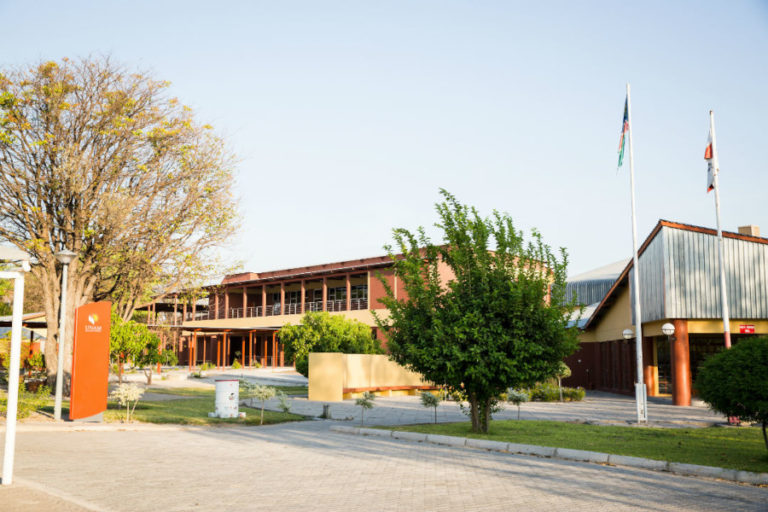
The suggestion that the University of Namibia’s Katima Mulilo Campus should be renamed after the late Brendan Kangongolo Simbwaye deserves thoughtful public discussion.
There should be no dispute about Simbwaye’s stature. He was an important son of the Zambezi Region and a significant figure in Namibia’s liberation struggle. His courage, sacrifice, and contribution to independence deserve national recognition and preservation for future generations.
The people of the Zambezi Region have every reason to take pride in Simbwaye and the important place he occupies in Namibia’s history. He has already received several worthy honours. District Road 3508—the Namalubi–Isize–Luhonono road in Kabbe North—carries his name, as does Brendan Simbwaye Primary School in Katima Mulilo. Nationally, he is commemorated through Brendan Simbwaye Square at Government Office Park in Windhoek and the NS Brendan Simbwaye, a patrol vessel of the Namibian Navy.
Simbwaye remains deserving of further recognition as a son of the Zambezi and one of the pioneers of the liberation movement in the region. The question before us is therefore not whether he deserves honour, but whether honouring him requires removing another name that carries its own history, identity and sense of belonging.
In preserving Namibia’s national history, there must also remain space for names of landmark significance such as Katima Mulilo.
Katima Mulilo Is Itself a Historical Record
Katima Mulilo is not merely the contemporary name of a town appearing on a road sign or administrative map. The name reaches much deeper into the history of the place, the Zambezi River and the generations of people who have lived in this part of Namibia.
Historical and oral accounts associate Katima Mulilo with the rapids of the Zambezi and the experiences of people who travelled the river by canoe. The expression is generally understood to mean “quench the fire” or “put out the fire.” Some accounts connect it to travellers whose fires were extinguished while they negotiated the rapids near a particular rock.
Whatever variations exist in accounts of its origin, the essential point remains: Katima Mulilo is a name born from the history and geography of the place itself.
It connects people to the Zambezi River and the settlement to its physical landscape. It connects present generations to those who travelled, settled and lived along these waters. It also provides a cultural and historical clue through which future generations can continue asking where they came from and how their home acquired its identity.
In that sense, Katima Mulilo is almost an unwritten historical record.
Long before the present town assumed its modern form, this was already a human landscape of communities, traditional authorities, settlements and movements of people. Historical accounts preserve different layers of that past, including earlier local names such as Nakabunze. These names also deserve acknowledgement alongside the national honour properly accorded to Simbwaye.
Katima Mulilo later became an important administrative centre and developed into the town we know today. Its name has travelled through different periods of our history and accumulated meaning along the way. It links the river and its rapids, indigenous settlement, traditional leadership, colonial administration, education, the liberation struggle, independence and the emergence of the modern town. That continuity gives the name its historical value.
Katima Mulilo Campus Also Has a History
The proposed renaming also requires us to consider the history of the educational institution itself. What is now the University of Namibia’s Katima Mulilo Campus did not suddenly appear when it became part of UNAM.
UNAM’s own institutional account traces the campus to the Katima Mulilo Teacher Training Centre, founded in the late 1960s. It was initially housed at St Kizito College, later operated from the premises of the then Caprivi State School during the 1970s, moved to the Tobias Hainyeko Centre in 1990, and relocated to its present campus in 1996.
The institution subsequently became known as the Caprivi College of Education. In 2011, following a Cabinet-directed merger of Namibia’s colleges of education with UNAM’s Faculty of Education, it became the Katima Mulilo Campus.
This journey matters. The name Katima Mulilo connects generations who remember the teacher-training centre, those who studied and worked at the Caprivi College of Education, and those who now know the institution as a university campus. It carries educational memory as well as geographical identity.
Renaming the campus would therefore not simply alter a sign. It would interrupt a name that has accompanied the institution through several stages of its development. Before such continuity is displaced, its heritage value deserves to be weighed alongside the importance of the person proposed for commemoration.
Katima Mulilo Is Also a Name of Belonging
There is recognition in the name Katima Mulilo. There is belonging in it. The name acknowledges that the university stands within a community whose history did not begin with the university, the modern town, or the independent Namibian state.
Modern Katima Mulilo did not develop on an empty landscape. The ancestors of local communities lived here. Traditional authorities exercised leadership here. Land and space were made available for the administrative, educational and other developments from which the modern town grew.
For the local community, Katima Mulilo is not only history that can be read in books. It is an identity that can be felt.
There is pride in seeing the name of one’s home carried by an important national institution such as the University of Namibia. This is consistent with other UNAM campuses that retain the names of their localities, including the Oshakati, Rundu and Keetmanshoop campuses.
When names arising from the local landscape remain visible on roads, institutions and public spaces, they give the descendants of those communities an important recognition: their history forms part of the foundation upon which the modern town developed.
That is why the name Katima Mulilo carries pride. It is also why the earlier disappearance of another important local name, Imukusi, should form part of this discussion. A society that remembers one hero should not be required to forget another person, place or layer of its history.
The Lesson of Imukusi
Katima Mulilo has already experienced how easily a local historical name can disappear from everyday public memory. The former Imukusi Street carried a name associated in community memory with local traditional leadership and with an older layer of authority in the landscape on which the modern town developed.
When the street was renamed after the late President Hage Geingob, an important national leader was honoured. The concern is not whether President Geingob deserved recognition — he unquestionably occupies an important place in Namibia’s history. The deeper question is what happened to the history carried by the name Imukusi.
How many young people will now encounter that name in a public place and be prompted to ask: Who was Imukusi? Which communities lived here? What forms of leadership existed before the modern town? When a name disappears from the physical landscape, history does not vanish immediately, but one of society’s everyday instruments of remembrance is removed.
Imukusi should therefore serve as a warning. If Katima Mulilo is also displaced from a major institution, another thread connecting the town to its local inheritance will have been weakened. A nation should be able to add the names of its heroes without repeatedly subtracting the names through which communities recognise their own past.
A Community Asking to Be Seen and Heard
The desire to preserve Katima Mulilo must also be understood against a deeper local experience. Many people whose ancestors inhabited this landscape, and whose families helped build the modern town, have at times felt overlooked, spoken for, or treated as though their contribution mattered less. Their patience should not be mistaken for an absence of memory, and their peacefulness should not be interpreted as consent to historical erasure.
The people of Katima Mulilo are not asking to be placed above anyone. They are asking not to be placed beneath anyone. They do not reject Namibia’s national heroes; they ask that national recognition should not repeatedly come at the expense of local names, memories and identities.
The Bible reminds us that there is “a time to keep silence, and a time to speak” (Ecclesiastes 3:7). For a community that has sometimes felt unheard, this is a time to speak peacefully, truthfully and firmly.
Putting a human face to Katima Mulilo means remembering the people who helped shape it. This is not an attempt to construct a final list of prominent personalities. It is an invitation to see the town through the lives of people who worshipped, taught, farmed, traded, administered, represented, and served here.
Katima Mulilo has faces and names known to most people:
- Pastor Lee L. Mubonenwa (church leadership pioneer)
- Mr David Mutonga Siukuta (Ngambela MTA, and former Minister in the Homelands)
- Mr Joseph Mukendwa (Pioneer Education Director, Zambezi Region)
- Mr Daniel Mutaniye (Honoured Namibian Hero)
- Mr Charles Soja (SWAPO veteran and NDF leadership pioneer)
- Dr Vincent Mwange (veteran of the struggle, SWAPO)
- Mr George Muyaeta (SWAPO veteran and teacher)
- Mr Patrick Itwa Likando (Zambezi CRO, pioneer)
- Hon. Bodrick Likando (current MP)
- Adv. Happy Ntelamo (former Miss Namibia)
- Mr Richard Kambinda (pioneer businessman in Katima Mulilo)
- Mr Branson Kwala (former councilor, KMTC)
- Mr Reagan Musunga (former councilor, KMTC)
- Ms Karen Mubonenwa (former councilor, KMTC)
- Mr Fred Mubonenwa (community activist on Silozi Radio Khuta ya Sicaba, and pioneer businessman)
- Mr Watson Mulele Siukuta (community activist on Silozi Radio, Khuta ya Sicaba)
- Pastor Stephen Mudengi (community activist on Silozi Radio Service, Khuta ya Sicaba, and church leader)
- Mr Bathremew Kambinda (community activist, Silozi Service, Khuta ya Sicaba)
- Dr Sam Ntelamo (currently CRO, Erongo)
- Dr Martin Harris (young educationist with UNAM)
- Dr Christian Harris (young educationist with UNAM)
- Mr Raphael Sikandango (late pioneer musician)
And a number of those who have and are still operating at the highest level nationally and internationally. We remember the late Mr Gabriel Ntelamo (former school headmaster and athlete), Mr Collins Mulele, Mr Michael Sibuku, Mr Davis Mubonenwa, Mr N. Kambanda and Mr C. Ndozi, who served as school headmasters until retirement; Mr Richard Kambinda and Mr Sam Siukuta, whose contribution to vocational education cannot be forgotten; and Mr Richard Kakona, Advocate Mbuyu Kwala and Mr Ruseel Mufaya, among the children of Katima Mulilo who continue to fly high.
Some of these people may never have received lengthy newspaper profiles, official biographies or buildings bearing their names. That absence tells us something about the limitations of the record; it does not establish that their lives were unimportant. Families, congregations, former colleagues, customers, neighbours and surviving elders often retain details that formal archives failed to collect.
This is why Katima Mulilo needs a deliberate community-history effort. Oral interviews, family photographs, church registers, council records, business documents and school archives should be gathered while witnesses can still explain them. The list offered here is only a beginning and must remain open to correction, expansion and the inclusion of women and less publicly visible community builders whose work sustained the town.
These names are not presented as a complete roll of honour. They represent only a fraction of the women and men whose labour, leadership and sacrifice gave Katima Mulilo its human character; the names are simply shared to give a name to a community.
This is therefore a respectful appeal to those entrusted with public authority: hear the people of Katima Mulilo. Preserve their place-names, record their pioneers and recognise their sacrifices. A community should not have to surrender its historical identity to demonstrate its patriotism. Katima Mulilo is a people; even Mwatanda was part of it.
Honour Through Development, Not Historical Substitution
Renaming landmarks to honour national heroes will always invite different perspectives. In the Zambezi Region, however, the underlying difficulty may also be the limited development of new public institutions and significant sites. When few new landmarks are created, honouring deserving figures too easily becomes a choice between replacing one historical name and preserving another.
Regional leaders, residents and the diaspora should therefore treat this debate as a development challenge. Meaningful investment in Bukalo Village Council, Kongola Settlement and other growth centres across the region would create new schools, roads, libraries, cultural centres, public squares and institutions. These developments would offer additional and lasting opportunities to honour Simbwaye and other people who have contributed to the advancement of the Zambezi Region and Namibia.
Brendan Simbwaye deserves honour. Katima Mulilo deserves preservation. These two truths do not contradict each other. A confident nation should be capable of celebrating its liberation heroes while protecting the historical names through which local communities recognise themselves.
Liwakala Mudengi writes in his capacity as a resident and native of Katima Mulilo.




 Loading …
Leave a Reply