

By Risco Lumamezi
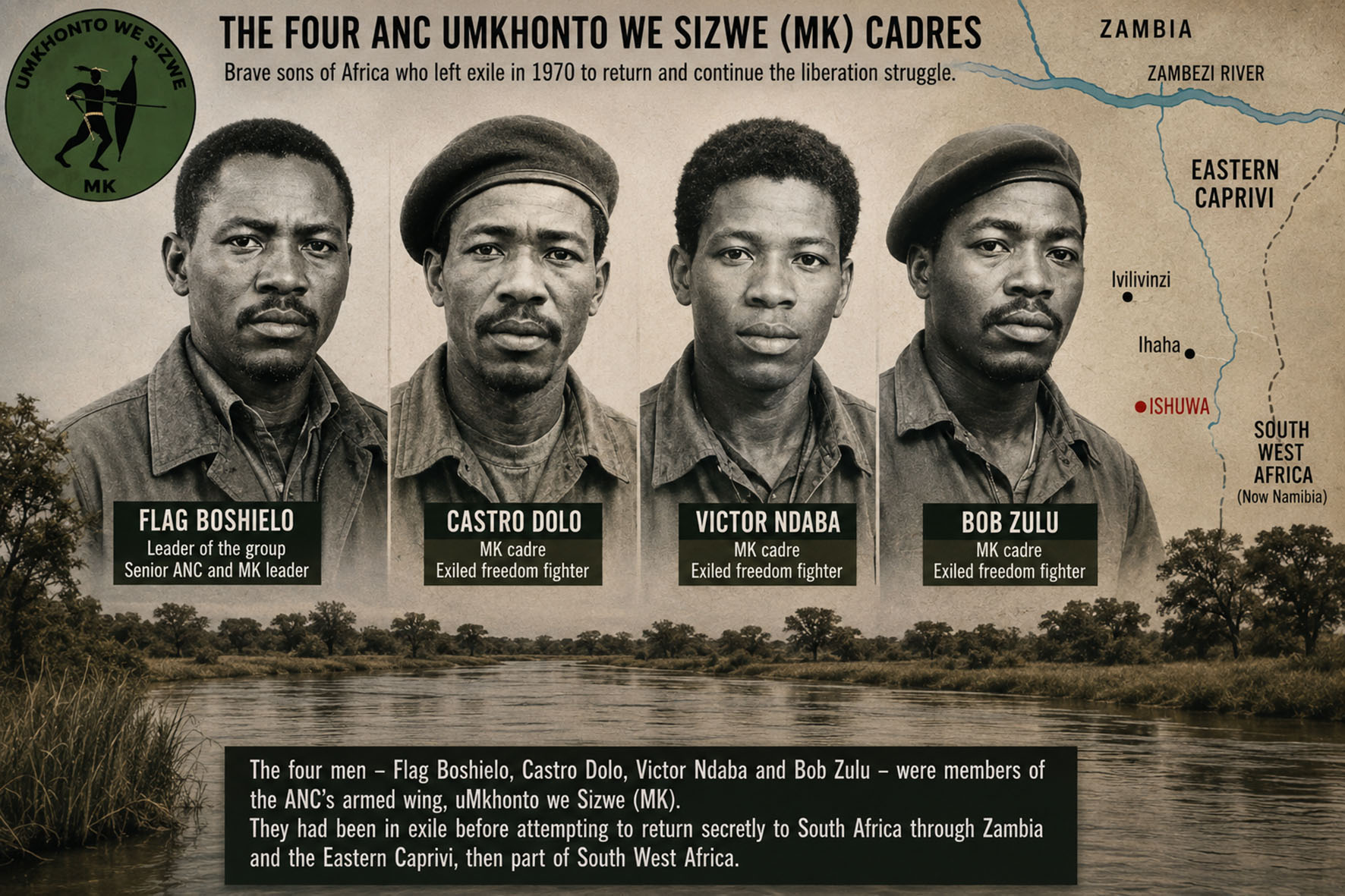
KATIMA MULILO — A decades-old mystery surrounding the disappearance of four senior African National Congress (ANC) freedom fighters in the former Eastern Caprivi has been brought closer to resolution following academic research linking their final journey to an ambush at Ishuwa on 20 August 1970.
The four men — Flag Boshielo, Castro Dolo, Victor Ndaba and Bob Zulu — were members of the ANC’s armed wing, uMkhonto we Sizwe (MK), and had been in exile before attempting to return secretly to South Africa through Zambia and the Eastern Caprivi, then part of South West Africa.
Their disappearance has remained one of the unresolved episodes of the liberation struggle.
Research by Lieneke de Visser of Utrecht University has pieced together local oral histories, archival material and interviews with former MK members and former South African Police personnel to reconstruct what may have happened to the men. The research was published in the Journal of Southern African Studies.
According to the research, the men crossed the Zambezi River and entered the Eastern Caprivi before being betrayed and led into a police ambush at Ishuwa, a floodplain between Ivilivinzi and Ihaha.
The journey into the Caprivi
Boshielo, the most senior member of the group, was a prominent ANC figure and Chief Political Commissar of MK. He had been a member of the ANC’s National Executive Council and was highly respected among the organisation’s cadres.
The decision to return to South Africa was considered extremely dangerous. ANC leadership in exile had concerns about the risks involved, but Boshielo remained determined to take the struggle back home.
The group’s movements eventually came under the attention of South African security authorities.
Local accounts gathered during de Visser’s research indicate that the men were assisted by a fisherman, Shamunihango Liswaniso, who allegedly agreed to guide them through the floodplains towards the Chobe River and Botswana.
Instead, according to the research, Liswaniso was cooperating with the South African Police and led the men towards Ishuwa, where police officers were waiting.
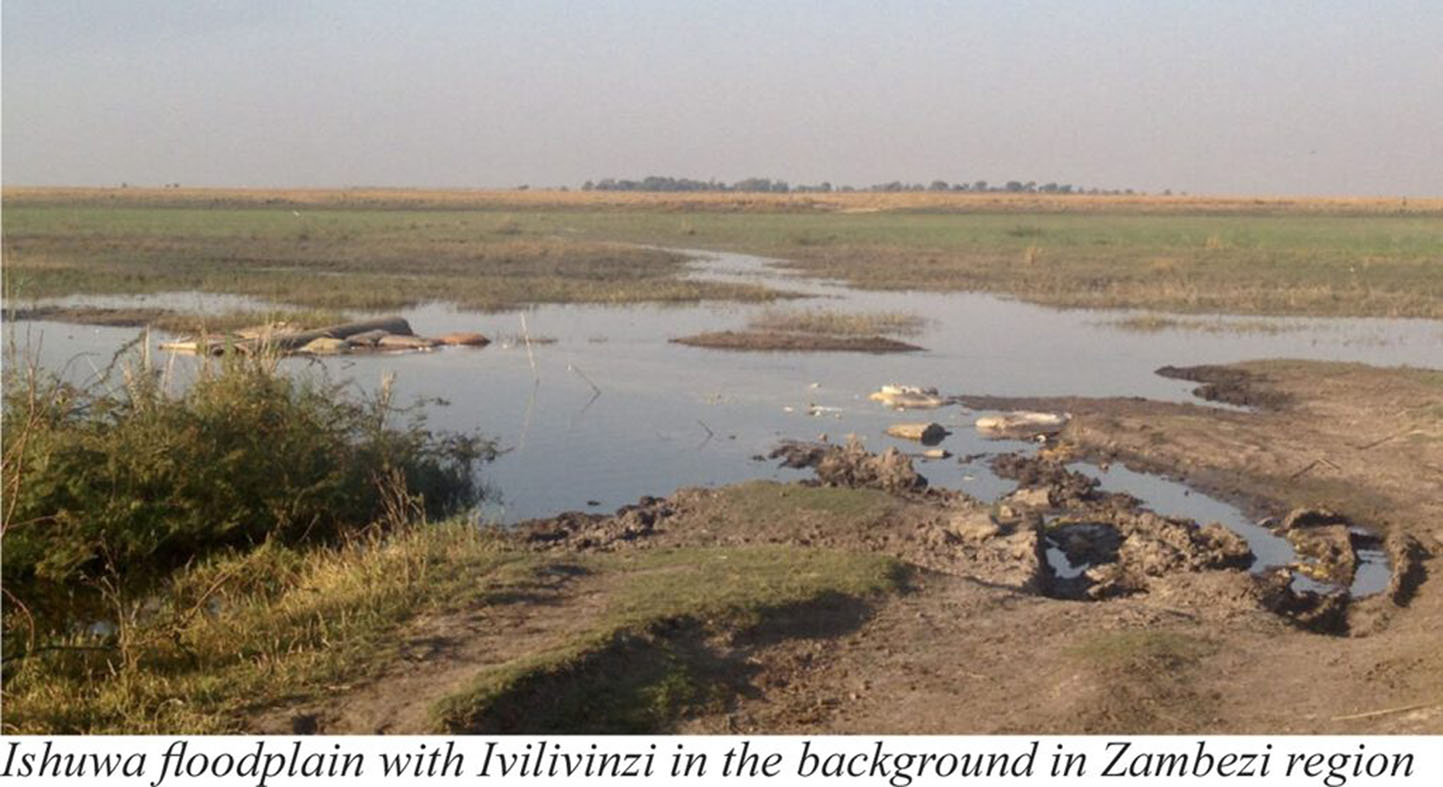
The floodplain offered few places for the police to conceal themselves. The ambush was therefore planned for after dark.
The four men reached the crossing at night, where the water was reportedly knee-deep.
Liswaniso instructed them to follow his footsteps and offered to carry their weapons. As the group crossed the water, he suddenly moved ahead of them.
The research records that police then switched on a spotlight and opened fire.
Three bodies recovered
Villagers in Ivilivinzi and Ihaha reportedly heard the gunfire that night.
When villagers later visited the area, they found spent cartridges, blood and reeds damaged by bullets. No graves were found at the scene.
South African Police records contained in an inquest dossier at the National Archives of Namibia provide an official account of the incident.
According to the police version, officers encountered the men and ordered them to surrender. The men allegedly attempted to flee, prompting police to open fire.
Three men were subsequently recorded as having been killed: Flag Boshielo, Castro Dolo and Victor Ndaba.
A post-mortem examination reportedly found that each had died from a single gunshot wound. The bodies were taken to the mortuary at Katima Mulilo Hospital.
An official inquest later concluded that no offence had been committed.
The ANC, however, remained uncertain about what had happened.
ANC leaders, including Oliver Tambo, Chris Hani, Joe Modise and John Pule Motshabi, travelled to the Zambian side of the Zambezi to investigate but could not establish the fate of the men with certainty.
What happened to Bob Zulu?
The most significant unresolved question is the fate of Bob Zulu, the fourth member of the group.
Unlike Boshielo, Dolo and Ndaba, Zulu does not appear in the available police and archival records concerning the deaths at Ishuwa.
The discovery of footprints at the scene has raised the possibility that one of the men survived the ambush.
De Visser’s research stresses that the available evidence cannot conclusively establish what happened to Zulu.
Similarly, the location of the three men’s graves remains unknown. A former SAP Security Branch member reportedly referred to a secret burial in an unmarked grave, but that account has not been independently corroborated.
A story preserved by local communities
One of the most important aspects of the research was the discovery that communities in the former Eastern Caprivi had preserved oral accounts of the incident for decades.
Villagers recalled stories of “foreign fighters” who had crossed the Zambezi and were subsequently betrayed to South African security forces.
Local historians and residents contributed information that helped researchers connect those accounts to the disappearance of the four ANC fighters.
The research demonstrates the importance of combining archival records with community knowledge, particularly in cases where official records are incomplete or missing.
Legacy of the missing fighters
The disappearance of Boshielo and his companions also had wider consequences for the Eastern Caprivi.
The South African authorities subsequently strengthened their security presence in the area and increased efforts to obtain information about people crossing through the region.
For decades, however, the full story of the four men remained obscured by conflicting accounts, incomplete records and the passage of time.
The new research does not resolve every question, but it provides the strongest reconstruction yet of their final journey.
In 2005, Boshielo was posthumously awarded the Order of Luthuli in Gold by the South African government. In 2012, all four men received a campaign medal connected to the mission that ended with their disappearance.
The mystery surrounding Bob Zulu, the location of the men’s remains and the precise circumstances of their deaths, however, remains unresolved.
What happened at Ishuwa more than five decades ago is therefore not only a chapter in the history of the ANC’s armed struggle, but also part of the largely untold liberation history of the Zambezi Region.
Ends
Source: Lieneke de Visser, “A Leap in the Dark: The Disappearance of Flag Boshielo, Castro Dolo, Victor Ndaba and Bob Zulu in August 1970,” Journal of Southern African Studies, Vol. 49, Nos. 5–6, pp. 841–860.




 Loading …
Leave a Reply