

By Staff Reporter
The US administration’s renewed push to acquire Greenland, coupled with tariff threats, has escalated into a fast-moving geopolitical and trade crisis with material implications for financial markets, energy and mining, defense, and broader global geopolitics, according to GlobalData, a leading intelligence and productivity platform.
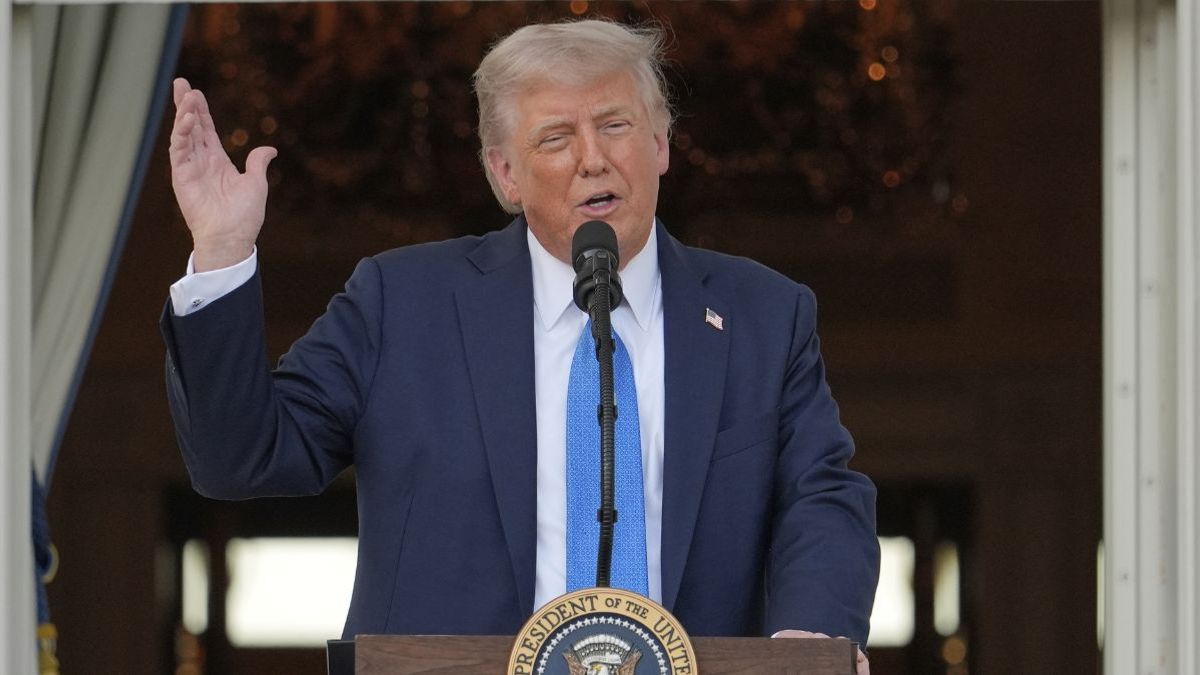
President Donald Trump has described Greenland’s acquisition as an “absolute necessity” for US national security, citing the need to counter Russian and Chinese influence in the Arctic. Denmark and Greenland have repeatedly rejected the proposal, stating that Greenland is “not for sale” and that Greenlanders must decide its future through self-determination.
Tensions escalated on 17 January 2026, when President Donald Trump issued a tariff ultimatum targeting eight European allies: Denmark, Norway, Sweden, Finland, France, Germany, the Netherlands, and the UK. A 10% tariff is set to take effect on February 1, rising to 25% on June 1, unless an agreement is reached on the “complete and total purchase of Greenland.”
Reports that the US explored one-off payments to Greenland’s residents have further intensified political backlash, reinforcing perceptions of coercive economic pressure.
Ramnivas Mundada, Director, Economic Research and Companies, GlobalData, comments: “Tying tariffs to a territorial demand marks a sharp departure from conventional trade disputes, increasing the risk of retaliation and heightening uncertainty for companies with transatlantic supply chains, even if no change in Greenland’s status ultimately occurs.”
Europe’s response
The European Union is reportedly preparing countermeasures described as a “trade bazooka,” including around EUR93 billion ($107.7 billion) in retaliatory tariffs on US goods. If US tariffs take effect on 1 February and the EU responds, GlobalData expects a higher probability of a tariff spiral in which initial measures trigger countermeasures, exemptions become bargaining chips, and corporate planning becomes more difficult as trade rules shift under political pressure.
European leaders have warned of damage to the transatlantic security relationship cautioned that any forced takeover of Greenland would effectively end NATO as it is currently understood. While a formal collapse of NATO is unlikely in the near term, GlobalData believes the risk of lasting harm is meaningful because reduced trust can weaken coordination, slow decision-making, and reinforce Europe’s push toward strategic autonomy.
Risks extend beyond the Arctic
Using tariffs and economic pressure to pursue territorial outcomes risks weakening norms that support predictable trade and investment. If border changes appear achievable through coercion, other major powers could be encouraged to pursue similar actions in their own regions, raising geopolitical risk and business uncertainty globally.
Investors retreat to safe havens
Investor sentiment shifted to a clear risk-off stance immediately following the announcements. European equity futures declined, Japan’s Nikkei fell, and US stock futures pointed lower despite a US market holiday. The US dollar weakened broadly, an unusual move for a traditional haven, as investors rotated into the Japanese yen, Swiss franc, and gold, with gold reaching a record high. Bitcoin declined as risk exposure was reduced. The euro initially dipped before stabilizing as markets reassessed political risk as increasingly US-centric. Pressure on the dollar reflects a rising US political risk premium and growing concerns over the financial weaponization of policy. Market volatility is expected to increase into 1 February 2026, and again near 1 June 2026.
Sector exposure
GlobalData sees the largest near‑term exposure in sectors with heavy transatlantic trade and tightly linked supply chains.
Industrials and manufacturing face the highest risk: Automotive, industrial machinery, and chemicals rely on cross‑border inputs and price‑competitive exports. A 10% tariff would be disruptive, while 25% could trigger structural shifts such as relocating production, qualifying new suppliers, and renegotiating contracts.
Consumer goods and luxury have moderate‑to‑high exposure because discretionary demand is sensitive to price rises and sentiment; currency moves may help some exporters, but tariffs can outweigh benefits, especially for premium products.
Pharma and medical devices face selective impact depending on exemptions, yet even limited tariffs add compliance complexity and planning uncertainty.
Defense and aerospace may see higher demand amid tensions, but multinational supply chains and joint programs could face greater friction.
Energy, mining, and critical minerals could gain strategic support, alongside higher screening, slower timelines, and tougher regulation.
Outlook
GlobalData recommends stakeholders monitor five near-term signals that will shape market and operational outcomes:
- Tariff implementation details (product scope, exemptions, enforcement mechanisms) ahead of 1 February.
- EU countermeasure design and timing, including whether retaliation is immediate or staged.
- NATO messaging and operational posture in the Arctic, including any further deployments or basing discussions.
- Greenland domestic political signals, including polling and statements on self-determination processes.
- Corporate guidance revisions, particularly in export-heavy manufacturing, discretionary consumer sectors, and defense supply chains.
Mundada concludes: “The situation has moved beyond rhetoric into a policy-driven confrontation, with tariffs being used to push a territorial demand. Even if the Greenland proposal does not proceed, the key damage comes from uncertainty and precedent. Companies and investors will price in higher political risk for transatlantic trade, Arctic operations, and the stability of the broader security environment.”
ENDS…
SOURCE: GLOBALDATA




 Loading …
Leave a Reply