

By Staff Reporter
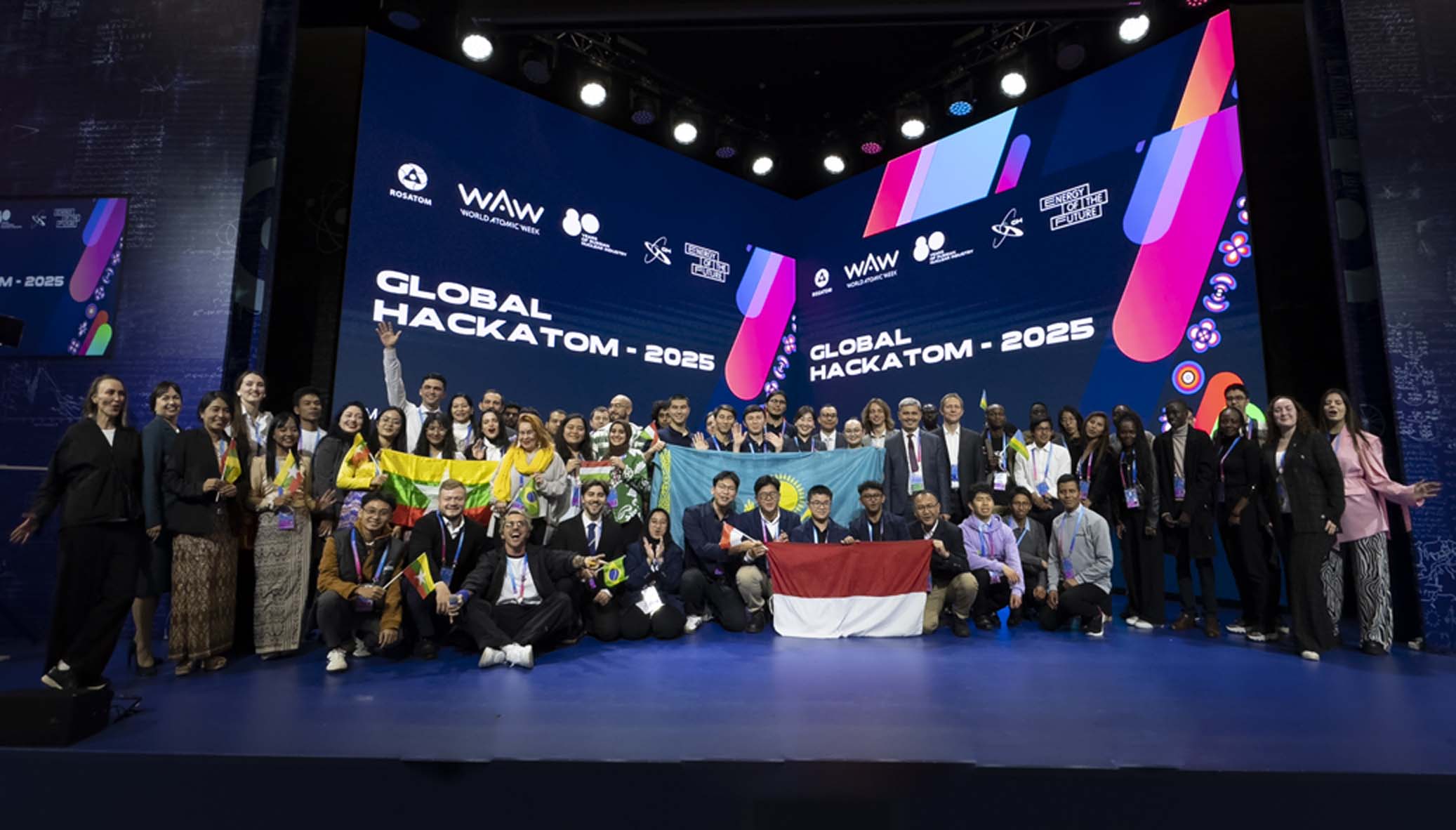
The Global HackAtom international student championship concluded recently, bringing together over 50 national winners from ten countries, including Namibia and Rwanda, to present innovative nuclear-powered solutions for space exploration and sustainable technology.
The first grand final of the Global HackAtom student championship, supported by Rosatom under the World Atomic Week youth programme, showcased the visionary ideas of young innovators from around the world. Students tackled challenges linking nuclear technology with space exploration, emphasizing clean energy and sustainable development.
Standout participants from Namibia and Rwanda demonstrated Africa’s growing scientific potential. Their national rounds, held at the University of Namibia in Windhoek and the University of Rwanda in Kigali, highlighted how African students are embracing nuclear science as a pathway to technological innovation. As part of the global finalist pool, they underscored the continent’s promising future in STEM fields.
“Today, you took a look into the future and presented projects that could make a breakthrough in human space exploration through the use of nuclear technology. You are already the best!” said Tatyana Terentyeva, Rosatom Deputy Director General for Human Resources.
The competition crowned the TUPI Tech team from Brazil as winners, who presented a modular nuclear reactor design to support space exploration and interplanetary missions. Indonesia’s Tahu Sumedang team took second place with a concept for using nuclear technologies to regulate circadian rhythms on deep space journeys. Hungary’s IsotopeX team placed third, proposing a nuclear power source for monitoring astronauts’ vital signs during sleep.
Vadim Titov, CEO of RAIN Private Institution, highlighted the importance of the championship as a platform for fostering innovation. “These events bring together students from diverse backgrounds, broadening perspectives and encouraging bold ideas. Nuclear science and technology are essential for future space exploration, reliable energy on the Moon and Mars, and faster interplanetary travel,” he explained.
The jury, composed of Rosatom representatives, astronomy popularisers, and engineering university experts, praised the high level of preparation and ingenuity displayed by the participants. Contestants presented solutions ranging from interplanetary travel and the construction of the first space nuclear power plant to the creation of a “Silk Road 2100” in outer space.
Beyond competition, Global HackAtom served as a networking hub where students and experts discussed the role of nuclear energy in clean technology, space research, and sustainable development. With national rounds in ten countries and over 650 participants, the championship highlighted the global interest in nuclear science and its potential to inspire the next generation of innovators.
In conclusion, the Global HackAtom championship successfully demonstrated how young minds from Africa and around the world are embracing nuclear science to drive innovation, clean energy, and space exploration. Through collaboration, bold ideas, and international exposure, the event highlighted the future leaders of global technology and engineering.
END..




 Loading …
Leave a Reply