

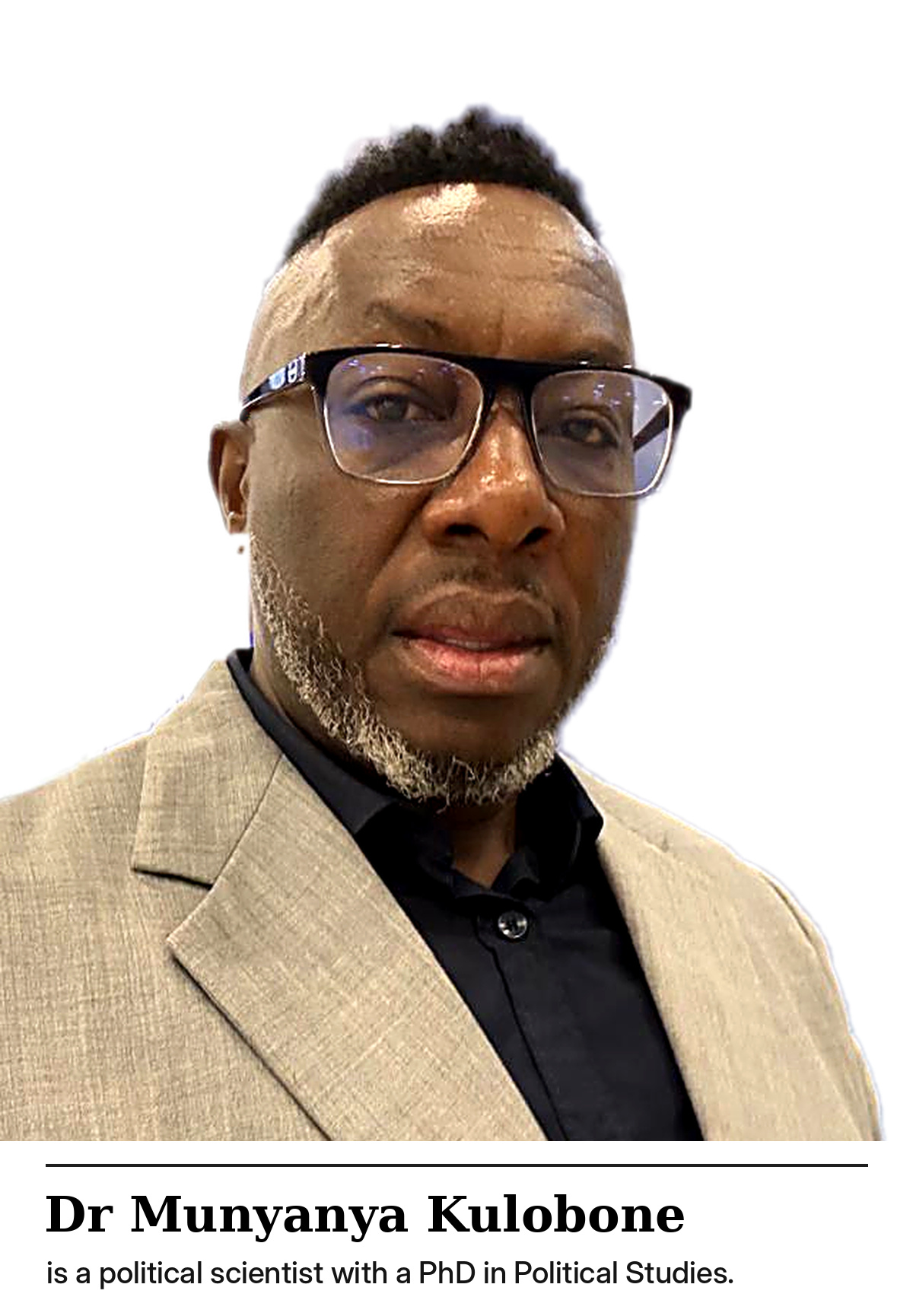
By Munyanya Kulobone
For decades, Africa has been both the world’s mine and its poorhouse. We dig the gold, lithium, cobalt and copper. Others refine it, manufacture it and sell it back to us at many times the price.
That old model is finally cracking, and it is cracking first in West Africa.
West Africa moves first
In September, Burkina Faso opened its first national gold refinery. In November, Guinea opened its own, months after banning raw gold exports. Mali has rewritten its mining code, raised the state’s potential stake to as much as 30% and is building its own refinery with Russian support. Ghana, in its 2027 Budget presented on 12 November, committed to refining 70% of its artisanal gold locally by December 2027 and 100% by December 2028, when raw artisanal gold exports will be banned. It also plans to end raw manganese and bauxite exports by 2030.
The message from Ouagadougou, Conakry, Bamako and Accra is clear: sovereignty is not a slogan. It is a refinery, a smelter and a technical school.
Captain Ibrahim Traoré said it plainly at the opening of Burkina Faso’s refinery: “From now on, gold from Burkina Faso must not only be extracted in Burkina Faso, it must be processed, controlled, valued and certified in Burkina Faso.” On 23 November, he opened the Faso Technology Academy outside Ouagadougou, a new institution set up to train engineers. The point is the same: a country that wants to process its own wealth must first build its own skills.
Rich in minerals, poor in value
Africa holds about 30% of the world’s critical mineral reserves, and the DRC alone produces more than 70% of global cobalt. Yet the continent captures only a sliver of the downstream value. The OECD finds that 96% of Africa’s critical mineral exports leave the continent raw or semi-processed. The Democratic Republic of Congo mines most of the world’s cobalt, yet very little of it becomes battery-grade material on African soil. We export the ore and import the battery.
SADC’s reformist path
SADC, by contrast, has chosen the reformist path.
Zimbabwe banned raw lithium ore exports in 2022 and, in February 2026, extended the ban to all raw minerals and lithium concentrates. Namibia banned the export of unprocessed lithium, cobalt, manganese and rare earths in 2023. The DRC suspended cobalt exports in February 2025, then moved to quotas of 96,600 tonnes a year for 2026 and 2027, roughly half of its 2024 output. Zambia’s new local content rules require mining companies to raise local procurement to at least 40% within five years. These are important steps.
But let us be honest: SADC still largely exports raw.
South Africa still ships most of its chrome and iron ore unprocessed. Most of Botswana’s diamonds are still cut and polished abroad. Namibia still sends its lithium concentrate and uranium overseas for further processing. Our bans exist on paper; our refineries do not yet exist on the ground.
Why the difference?
First, politics. The leaders of the Alliance of Sahel States (AES) — Burkina Faso, Mali and Niger — came to power through coups. They face no election to lose, and their legitimacy rests largely on defying France. SADC leaders are mostly elected, debt-constrained and still dependent on Western investors and lenders.
Second, history. Francophone West Africa lived under the CFA franc and French mining companies such as Orano, so the break felt like a second independence. After independence, SADC chose partnership over rupture — a wiser choice in many ways, but one that left the old contracts largely intact.
Third, leverage and capacity. Mali, Burkina Faso and Guinea have gold. Zimbabwe and the DRC have the lithium and cobalt the world needs for electric vehicles. That gives them bargaining power. But a ban without a refinery is just a stockpile. In Guinea, some of the biggest miners have been stockpiling gold they cannot export because domestic refining has been slow to start. Burkina Faso’s refinery is not yet accredited by the London Bullion Market Association, so its bars may still need to be re-refined abroad before major buyers accept them. Mali’s industrial gold output fell 23% in 2025 amid a long standoff with Barrick over its tough new code.
A warning for all of us
You cannot decree beneficiation into existence. You must build it — with power, water, skills, accreditation and markets.
So who is right? West Africa is winning the narrative; SADC, for now, is winning the investment. Zimbabwe’s lithium producers have already committed about $3.4 billion to local processing, and the industry says the total could reach $5 billion — all without nationalisation, because investors still feel safe.
The real lesson, however, is not to choose between revolution and reform. It is to combine them.
Three lessons for Namibia and SADC
Namibia, and SADC as a whole, must learn three things from West Africa.
First, build the plant, then ban. A ban is a tool, not a strategy. Ghana understands this: it plans a 24-hour critical minerals processing enclave in the Western Region, backed by new power infrastructure and a railway, before its bans take full effect.
Second, invest in technical education, not just theory. Without engineers, metallurgists and technicians, a refinery is just a building. Traoré’s academy is not a side project; it is the core of sovereignty.
Third, think regionally. No SADC country alone has the scale to refine everything. But SADC as a single market — a Namibian lithium hub, a Zambian copper smelter, a South African battery plant — could compete with China and Europe. The region already has a head start: South Africa’s Rand Refinery is the only LBMA-accredited gold refinery in Africa. The African Mining Vision and the African Green Minerals Strategy already call for this kind of integration. We must implement them.
From courage to capacity
Every tonne of raw ore we ship is a factory, a payroll and a skill built somewhere else. The era of raw exports must end — not with slogans, but with smelters, refineries and skills.
West Africa has shown the courage. SADC must now show the capacity.
Munyanya Kulobone is a political scientist with a PhD in Political Studies.





Leave a Reply