

By Staff Reporter
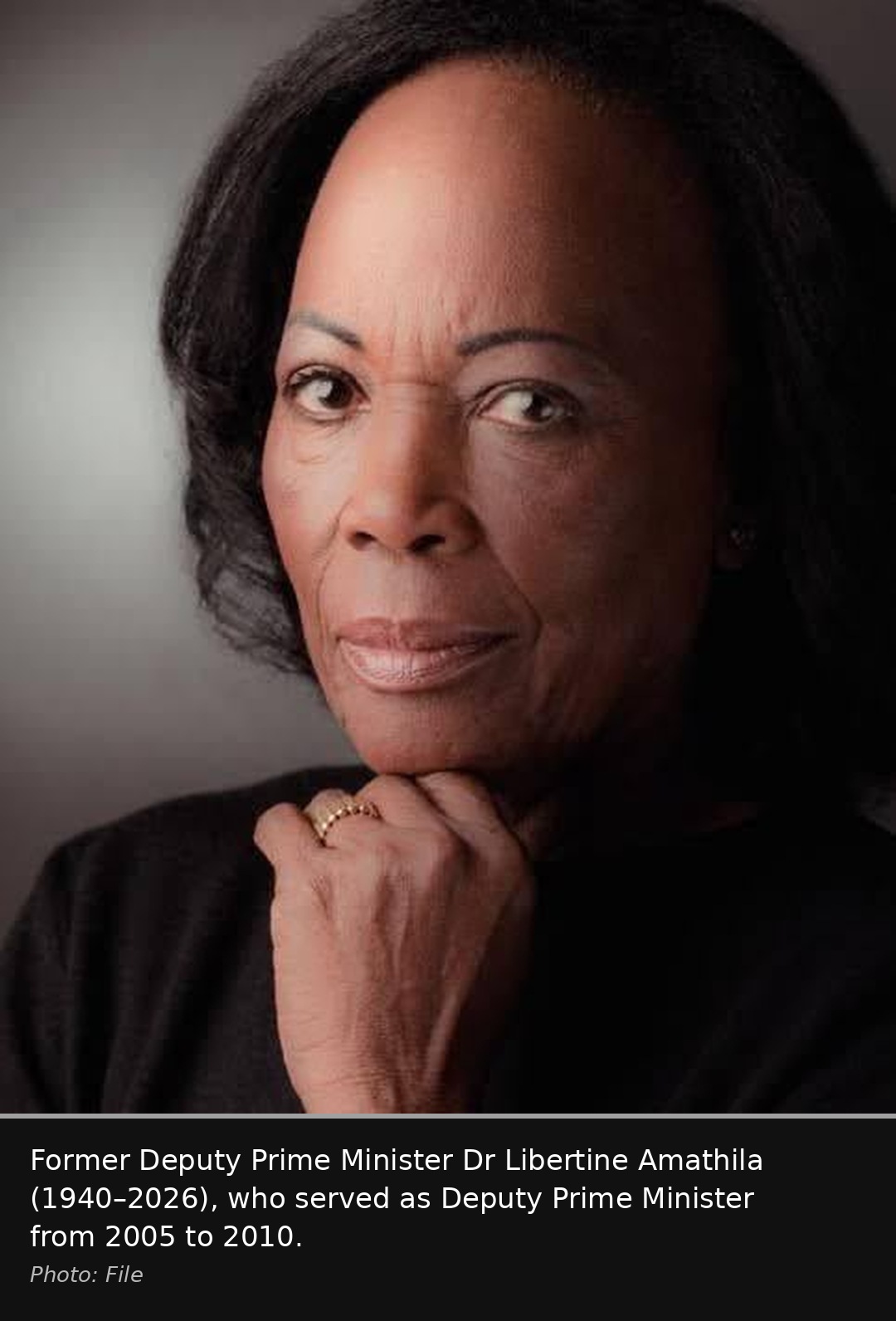
Prime Minister Dr Tjitunga Elijah Ngurare has mourned former Deputy Prime Minister Dr Libertine Amathila, Namibia’s first female doctor, who passed away at a Windhoek hospital on 25 November 2026, aged 85.
The Prime Minister, together with the management and staff of the Office of the Prime Minister, described Dr Amathila as a distinguished patriot, a dedicated public servant and a pioneering leader. They said her contribution to Namibia’s liberation, independence and nation-building “remains firmly etched in our country’s history.”
Early life and education
Dr Amathila was born Libertina Inaviposa Appolus on 10 December 1940 in Fransfontein, Kunene Region. Her mother and grandmother encouraged her to pursue her education. She decided to become a doctor after seeing the poor hospital conditions her mother faced during an illness. Growing up under apartheid, and witnessing events such as the Windhoek shootings, drew her into politics.
She studied at schools in Otjiwarongo and Fransfontein and at the Augustineum Secondary School. Her classmates there included Ben Amathila, Hage Geingob, Theo-Ben Gurirab and Katuutire Kaura. She completed her Senior Certificate at Wellington High School in Cape Town.
Exile and the liberation struggle
In 1962 she went into exile in Tanzania. Under the SWAPO Nationhood Programme, she received a scholarship to study medicine at the Warsaw Medical Academy in Poland. She graduated in 1969, becoming Namibia’s first female medical doctor. She later received her medical licence in Sweden and studied nutrition and public health at the London School of Hygiene and Tropical Medicine.
At SWAPO’s 1969 consultative congress in Tanzania, she became deputy secretary for health and welfare and director of the SWAPO Women’s Council, a role she held until 1989. She cared for Namibians in SWAPO refugee camps during the struggle.
Service to an independent Namibia
Dr Amathila was a member of the Constituent Assembly that drafted Namibia’s Constitution. At independence, she was one of only four women in Parliament. She served as Minister of Regional and Local Government and Housing from 1990 to 1996, and then as Minister of Health and Social Services until 2005. On 21 March 2005, she became Deputy Prime Minister, serving until 2010.
She also made her mark internationally. In 1999 she was elected chairperson of the World Health Organization’s Regional Committee for Africa, and in 2000 she became President of the 53rd World Health Assembly.
Retirement and legacy
She retired from politics on 21 March 2010, the 20th anniversary of Namibia’s independence. In retirement, she remained close to communities and championed health and education for young people. In 2012 she published her autobiography, Amathila: Making a Difference, to inspire young Namibian women.
She supported the Otjomuru Combined School in Kunene for years. In 2023, the school was renamed in her honour. In 2021, she built a home for and arranged medical care for a visually impaired elderly couple in the Oshikoto Region.
Her honours included the Ongulumbashe Medal for Bravery and Long Service (1987), Namibia’s Woman of the Year award (1991) and the Nansen Refugee Award (1991).
She was the former wife of fellow liberation veteran and politician Ben Amathila.By Staff Reporter
Prime Minister Dr Tjitunga Elijah Ngurare has mourned former Deputy Prime Minister Dr Libertine Amathila, Namibia’s first female doctor, who passed away at a Windhoek hospital on 25 November 2026, aged 85.
The Prime Minister, together with the management and staff of the Office of the Prime Minister, described Dr Amathila as a distinguished patriot, a dedicated public servant and a pioneering leader. They said her contribution to Namibia’s liberation, independence and nation-building “remains firmly etched in our country’s history.”
Early life and education
Dr Amathila was born Libertina Inaviposa Appolus on 10 December 1940 in Fransfontein, Kunene Region. Her mother and grandmother encouraged her to pursue her education. She decided to become a doctor after seeing the poor hospital conditions her mother faced during an illness. Growing up under apartheid, and witnessing events such as the Windhoek shootings, drew her into politics.
She studied at schools in Otjiwarongo and Fransfontein and at the Augustineum Secondary School. Her classmates there included Ben Amathila, Hage Geingob, Theo-Ben Gurirab and Katuutire Kaura. She completed her Senior Certificate at Wellington High School in Cape Town.
Exile and the liberation struggle
In 1962 she went into exile in Tanzania. Under the SWAPO Nationhood Programme, she received a scholarship to study medicine at the Warsaw Medical Academy in Poland. She graduated in 1969, becoming Namibia’s first female medical doctor. She later received her medical licence in Sweden and studied nutrition and public health at the London School of Hygiene and Tropical Medicine.
At SWAPO’s 1969 consultative congress in Tanzania, she became deputy secretary for health and welfare and director of the SWAPO Women’s Council, a role she held until 1989. She cared for Namibians in SWAPO refugee camps during the struggle.
Service to an independent Namibia
Dr Amathila was a member of the Constituent Assembly that drafted Namibia’s Constitution. At independence, she was one of only four women in Parliament. She served as Minister of Regional and Local Government and Housing from 1990 to 1996, and then as Minister of Health and Social Services until 2005. On 21 March 2005, she became Deputy Prime Minister, serving until 2010.
She also made her mark internationally. In 1999 she was elected chairperson of the World Health Organization’s Regional Committee for Africa, and in 2000 she became President of the 53rd World Health Assembly.
Retirement and legacy
She retired from politics on 21 March 2010, the 20th anniversary of Namibia’s independence. In retirement, she remained close to communities and championed health and education for young people. In 2012 she published her autobiography, Amathila: Making a Difference, to inspire young Namibian women.
She supported the Otjomuru Combined School in Kunene for years. In 2023, the school was renamed in her honour. In 2021, she built a home for and arranged medical care for a visually impaired elderly couple in the Oshikoto Region.
Her honours included the Ongulumbashe Medal for Bravery and Long Service (1987), Namibia’s Woman of the Year award (1991) and the Nansen Refugee Award (1991).
She was the former wife of fellow liberation veteran and politician Ben Amathila.





Leave a Reply