

By Staff Reporter
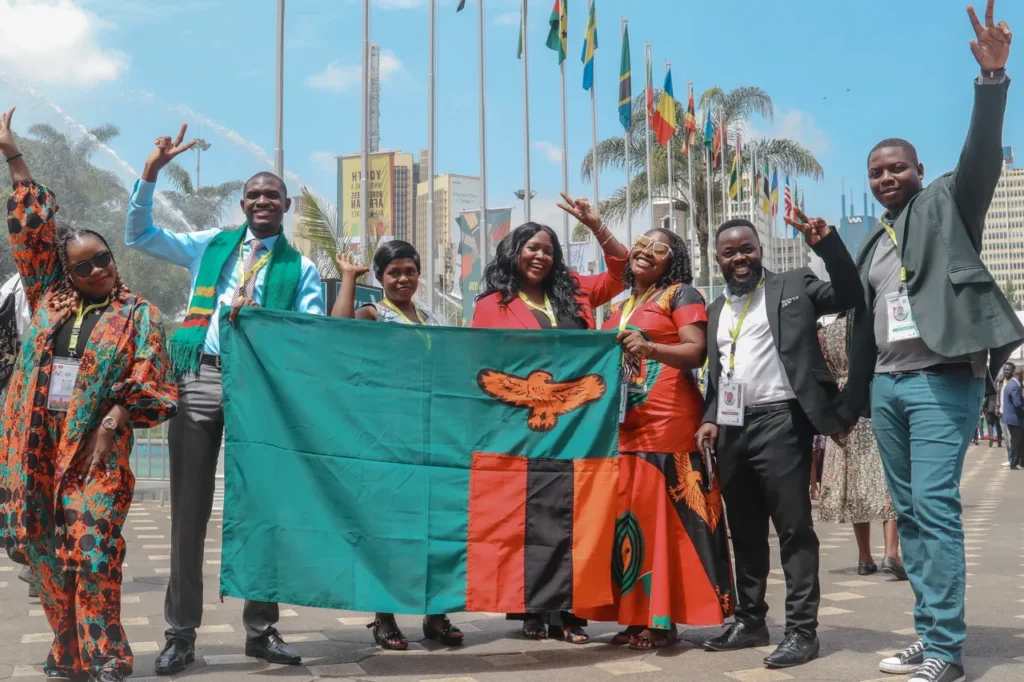
Ahead of International Youth Day on Wednesday August 12, Young Zambians are displaying a rise in confidence and optimism about their country’s future, with growing numbers choosing to build their lives, careers and businesses at home.
According to the recent African Youth Survey 2026 report , the continent’s most comprehensive study of young Africans, commissioned by the Ichikowitz Family Foundation and conducted by global research firm PSB Insights.
The survey, based on 4,897 face-to-face interviews with 18- to 24-year-olds across 16 African countries, has been released ahead of International Youth Day on 12 August and finds that 55 percent of young Zambians believe their country is heading in the right direction, more than double the 23 percent recorded in 2024 and up from just 10 percent in 2022.
Confidence in the country’s economic direction has also risen, from 17 percent in 2024 to 55 percent in 2026, compared with a Sub-Saharan African average of 45 percent.
This growing confidence extends to young people’s personal outlook. Nearly six in ten young Zambians describe themselves as optimistic or excited about the future of their country, almost three times the level recorded two years ago.
At the same time, Zambia is seeing a decline in the number of young people considering emigration. Just 27 percent say they are likely to leave the country in the next three years, down from more than half in 2024, while a clear majority say they are unlikely to leave.
For a generation facing economic uncertainty across much of the continent, the findings point to a combination of optimism, ambition and a growing determination to build a future in Zambia.
“What we are seeing among young Zambians is a powerful expression of Afro-optimism,” said Ivor Ichikowitz, Chairman of the Ichikowitz Family Foundation. “They are looking at their future with greater confidence, but this is not passive optimism. It is an optimism expressed through ambition — through entrepreneurship, education, technology and a desire to build their futures at home.”
Young Zambians report some of the strongest perceptions of personal safety recorded in the survey.
Ninety-two percent say they feel safe in their country today, the second highest figure among the 16 countries surveyed and significantly above the Sub-Saharan African average of 70 percent.
These perceptions form part of a broader picture of confidence among young Zambians, who increasingly see opportunities to build their futures within the country.
The rising cost of living (37%) is regarded as the event having the greatest impact on Zambia’s youth over the last five years, followed by death form infectious diseases at 19%.
Creating opportunities for young people is central to their vision for Zambia’s future. Two thirds identify job creation for young people as the single most important driver of national security, while access to basic needs and services and the creation of well-paying jobs rank among their leading priorities for Africa’s progress.
“The message from Zambia’s youth is remarkably consistent: they want opportunity,” said Ichikowitz. “They want jobs, access to capital, education and the freedom to build businesses. Their response to uncertainty is not retreat, but ambition. That should be an important signal to investors, businesses and institutions looking at Zambia’s future.”
Nearly eight in ten say they want Zambia’s natural resources to be managed responsibly. When considering international partners, investment in infrastructure and the economy, together with respect for Zambia’s natural resources, rank among their leading considerations.
“Zambia’s young people are pragmatic, ambitious and increasingly confident in their country’s future,” said Ichikowitz. “They are not asking to be spectators in that future. They want to build businesses, create jobs, embrace technology and ensure that Zambia’s natural resources create opportunity for generations to come.”
The African Youth Survey 2026 is the fourth edition of the study since 2020 and has now captured the views of almost 19,000 young Africans across 28 countries. The research provides a longitudinal picture of how Africa’s youngest generation is responding to economic, social, technological and geopolitical change.
The Zambia findings form part of the 2026 survey, which seeks to give young Africans a voice on the issues shaping their lives and the future of their countries and continent.
Ends…




 Loading …
Leave a Reply