

By Staff Reporter
Africa’s true size and how it is portrayed on world maps have come under renewed scrutiny following a United Nations (UN) resolution challenging the widespread use of map projections that visually distort the continent.
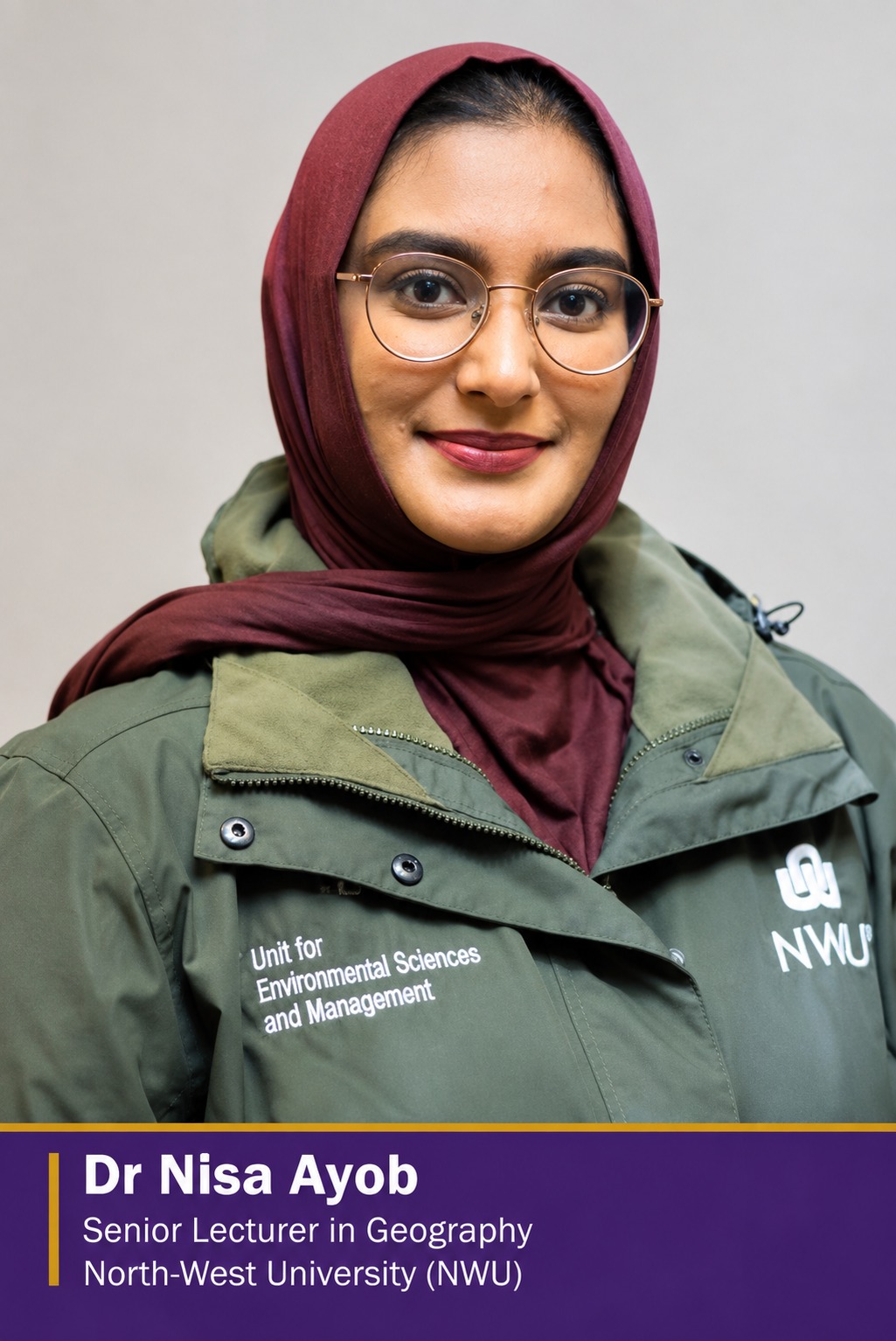
Dr Nisa Ayob, a senior lecturer in geography at North-West University (NWU), says the debate is not simply about making Africa appear larger, but about improving public understanding of how maps influence perceptions of the world.
At the centre of the debate is the Mercator projection, developed in the 16th century primarily for navigation.
The projection preserves direction, making it useful for sailors, but distorts the relative size of land masses by enlarging areas closer to the poles.
Africa, which lies largely around the Equator, does not receive the same visual enlargement as Europe, North America and Greenland.
“The problem is not that the Mercator projection is technically ‘wrong’; the problem is that it has been used far beyond the purpose for which it was designed,” Ayob said.
One of the clearest examples is Greenland. On a Mercator map, the island can appear comparable in size to Africa, despite Africa being approximately 14 times larger.
Ayob said the issue is significant because maps do more than identify countries, continents and geographical features.
“Maps are not only technical products; they are also powerful communication tools,” she said.
She explained that most people do not calculate the actual size of continents when looking at a map. Instead, they develop an understanding of geographical size from what they see.
Repeated exposure to distorted representations can consequently influence perceptions of Africa’s geographical scale and importance.
The debate has gained further momentum following the UN resolution adopted in September 2026, which has highlighted the use of equal-area projections such as Equal Earth.
The Equal Earth projection was developed in 2018 by Bojan Šavrič, Bernhard Jenny and Tom Patterson. Unlike the Mercator projection, it is designed to preserve the relative size of land masses.
The “Correct the Map” resolution was sponsored by Togo and backed by African Union (AU) members. It reportedly received support from 164 countries, including France and the United Kingdom. The United States voted against the resolution, while six countries abstained.
The AU’s 54 member states had accepted the Equal Earth map in February 2026.
“Africa is not being ‘made bigger’ through these projections; rather, its size is being represented proportionally in relation to the rest of the world,” Ayob said.
However, she warned that changing map projections does not mean eliminating distortion altogether.
“No map is perfect,” she said.
According to Ayob, every flat map of the Earth involves some degree of distortion because projections can preserve certain properties, such as area, shape, distance or direction, but cannot preserve all of them simultaneously.
She said cartographers should therefore choose projections based on the purpose for which a map is being used.
The debate could also provide an opportunity for schools and universities to rethink the maps displayed and taught in classrooms.
Ayob suggested that learners compare Mercator and equal-area maps to see how Africa, Europe, North America and Greenland appear under different projections.
Such exercises could help students understand that maps are constructed representations of geographical reality rather than perfect pictures of the Earth.
Ayob teaches geographical information systems and spatial analysis to undergraduate and postgraduate students at NWU. Her work examines how spatial data, cartographic decisions and map projections influence the interpretation of geographical information.
“We should not simply replace one wall map with another without explanation,” she said.
Instead, she encouraged learners to question the maps they use by asking what a particular projection preserves, what it distorts and whether it is appropriate for the geographical question being considered.
Ends…




 Loading …
Leave a Reply